Showing posts with label nader. Show all posts

Wednesday, July 18, 2018

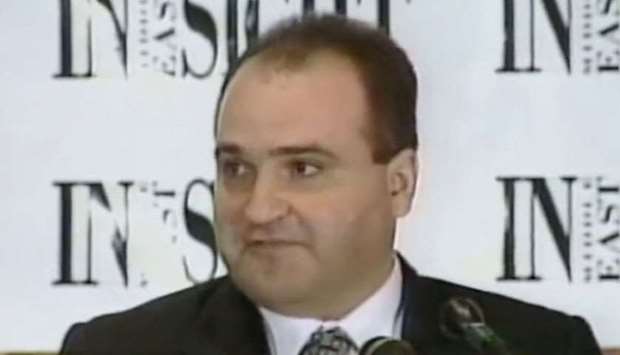
George Nader purportedly orchestrated the gathering


The New York Times reported earlier this week that George Nader—a 58-year-old businessman and close adviser to the effective ruler of the United Arab Emirates, The newly released records provide new details about the activity that brought George Nader to the attention of federal prosecutors and about the highly secretive work that led him to get a relatively lenient sentence three decades ago: his role in negotiating for the release of U.S.    

Sources revealed to CNN the talks about George Nader's quality at the New York and Seychelles gatherings have proceeded from that point forward. The 58-year-old George Nader, who has largely remained out of the public eye since his career began, has become an integral part of the US investigation into alleged foreign meddling in American politics.

In many ways, the partnership between Broidy, 60, and George Nader, 59, embodies the insider influence that has given contractors in D.C.    George Nader purportedly orchestrated the gathering in the interest of Prince Mohammed, while Prince professedly filled in as a Trump progress agent, and Dmitriev was there speaking to the Kremlin. George Nader reportedly arranged the meeting on behalf of Prince Mohammed, while Prince allegedly served as a Trump transition envoy, and Dmitriev was there representing the Kremlin.

After that discussion, Emirati officials helped set up the Seychelles meeting between Dmitriev, the head of the Russian investment fund, and Prince, a prominent Trump donor and founder of the security firm Blackwater.    George Nader, a Lebanese-American businessman, has hovered on the fringes of international diplomacy for three decades.

A lawyer for George Nader, Sandeep Savla, said on Friday that people eager to undermine George Nader’s credibility were trying to silence him by dredging up his past. But he didn’t last: George Nader dropped out in 1980, according to a 1981 article, to start International Insight Inc. Bush administration (1989-1993) George Nader helped to free American hostages in Lebanon after the Iran-Contra affair.

George Nader purportedly endeavored to use his connections to Syrian authorities into contacts with the Obama organization, and later turned into a counsel to receptacle Zayed of the United Arab Emirates, the Times revealed.   George Nader got his photo op in October, and the Republican National Committee received a $189,000 donation from Broidy a month later.

Broidy announced he was gaining ground, and George Nader kept the principals advised on their enterprises, messages appear. Broidy and George Nader proposed numerous plans to the sovereigns for more than $1 billion of work. Elliott Broidy a best pledge drive for President Donald Trump, and George Nader, Broidy's business accomplice, pitched themselves and pushed the interests of Saudi Arabia and the UAE to the White House.

Last fall, Broidy sent George Nader a memo detailing how, in a private meeting with Trump in the Oval Office, he had pushed for the president to meet with bin Zayed and support his foreign policy goals in the region.    A representative for Kushner wouldn't remark, and his legal advisor did not react to a demand.

George Nader appears to have utilized some possibly sketchy strategies to campaign for Middle Eastern nations. George Nader introduced bin Zayed to Elliott Broidy, a top Trump fundraiser and the owner of a private security company, according to the Times.

It is George Nader’s relationship with an emperor like figure, the United Arab Emirates’ Crown Prince Mohammed bin Zayed Al Nahyan, that has drawn Mueller’s interest. Since then, George Nader has been talking to Mueller's investigators and providing information to the grand jury.

It’s unclear what they discussed during those meetings, but given George Nader’s style of using business deals to score political points, investigators are surely looking for signs of foul play.    

Thursday, July 12, 2018

George Nader said he had dinner guests and would call back.


 And frankly, although people were doubtful about his motives, he developed a reputation of being able to deliver.    Setting up and going to powerful gatherings like the one in the Seychelles would not be unusual for George Nader. George Nader reportedly tried to leverage his ties to Syrian officials into contacts with the Obama administration, and later became an adviser to bin Zayed of the United Arab Emirates, the Times reported.    

The 58-year-old George Nader, who has to a great extent stayed out of the general population eye since his profession started, has turned into a fundamental piece of the US examination concerning claimed outside interfering in American legislative issues. From 1981 through the 1990s, George Nader was editor of Middle East Insight.   When he ventured far from the distributing scene, George Nader seems to have gone further into dealmaking. What follows is a brief guide to George Nader’s shady past and why it seems like Mueller has taken an interest in him. George Nader twice emailed his friend with another delicate request: The leader of the U.A.E.

George Nader seems to have invested the greater part of his energy in the Middle East, particularly in Iraq after the 2003 intrusion.   George Nader, a 58-year-old Lebanese-American, has kept a low profile even among Middle East experts in the US. The UAE counsel, George Nader, is presently an observer in the U.S. His Syrian connections prompted Israeli ones amid the peace procedure, and furthermore attached George Nader to Ronald Lauder — now the Trump-adulating leader of the World Jewish Congress who has long held close connections to Benjamin Netanyahu.

George Nader also spent time in Baghdad during the Iraq War, hired by Prince to help secure contracts with the Iraqi government.    George Nader, the adviser to United Arab Emirates Crown Prince Mohammed bin Zayed Al Nahyan, commonly called MBZ, has reportedly played an important role in shaping US policy in the Middle East for decades. Reports that George Nader is presently engaged with the extraordinary insight's examination add another measurement to the Russia outrage that keeps on plagueing the administration.

Reports that George Nader is now involved in the special counsel’s investigation add a new dimension to the Russia scandal that continues to plague the presidency. At the time George Nader and Broidy were pushing the White House to expel Secretary of State Rex Tillerson, whom the Saudis and Emiratis saw as deficiently extreme on Iran and Qatar.   In the Middle East, George Nader had a completely astonishing level of contact with the general population we were conversing with. We were quiet, aside from the individuals who sobbed, George Nader wrote in an article for The Washington Post three months after the fact.

George Nader was engaged with talks that eventually prompted George Nader arrival of the individuals who were being held in Lebanon, Ross said. George Nader went to a December 2016 gathering in New York between Emirati authorities and individuals from Trump's inward circle, and another in January 2017 in the Seychelles islands between the Emiratis and Erik Prince, a Trump relate. Weeks after George Nader wired $2.5 million to Broidy through an organization in Canada, Broidy started making huge gifts to individuals from Congress who were supporting enactment condemning of Qatar.   

But George Nader, an adviser to Sheikh Mohammed bin Zayed Al Nahyan, the Abu Dhabi crown prince, wanted a photo with Trump when the pair met at an RNC fundraiser in Dallas in October 2017. Ideally, Broidy and George Nader would work to persuade the US government to sanction Qatar and move a key military base from Qatar to another location in the Gulf.

His Syrian relationships led to Israeli ones during the peace process, and also tied George Nader to Ronald Lauder — now the Trump-praising president of the World Jewish Congress who has long held close ties to Benjamin Netanyahu. The report described George Nader as an associate of Bannon who also met with Kushner.

Wednesday, June 20, 2018

Who Is Behind Trump’s Links to Arab Princes? A Billionaire Friend and George Nader


The financier Tom Barrack told the 2016 Republican National Convention that Donald J. Trump “played me like a Steinway piano” in the 1988 deal that began their friendship.CreditShawn 

By David D. Kirkpatrick
June 13, 2018
The billionaire financier Tom Barrack was caught in a bind.

In April 2016, his close friend Donald J. Trump was about to clinch the Republican presidential nomination. But Mr. Trump’s outspoken hostility to Muslims — epitomized by his call for a ban on Muslim immigrants — was offending the Persian Gulf princes Mr. Barrack had depended on for decades as investors and buyers.

“Confusion about your friend Donald Trump is VERY high,” Ambassador Yousef al-Otaiba of the United Arab Emirates emailed back when Mr. Barrack tried to introduce the candidate, in a message not previously reported. Mr. Trump’s image, the ambassador warned, “has many people extremely worried.”

Not deterred, Mr. Barrack, a longtime friend who had done business with the ambassador, assured him that Mr. Trump understood the Persian Gulf perspective. “He also has joint ventures in the U.A.E.!” Mr. Barrack wrote in an email on April 26.

The emails were the beginning of Mr. Trump’s improbable transformation from a candidate who campaigned against Muslims to a president celebrated in the royal courts of Riyadh and Abu Dhabi as perhaps the best friend in the White House that their rulers have ever had. It is a shift that testifies not only to Mr. Trump’s special flexibility, but also to Mr. Barrack’s unique place in the Trump world, at once a fellow tycoon and a flattering courtier, a confidant and a power broker.

During the Trump campaign, Mr. Barrack was a top fund-raiser and trusted gatekeeper who opened communications with the Emiratis and Saudis, recommended that the candidate bring on Paul Manafort as campaign manager — and then tried to arrange a secret meeting between Mr. Manafort and the crown prince of Saudi Arabia. Mr. Barrack was later named chairman of Mr. Trump’s inaugural committee.

But Mr. Manafort has since been indicted by the special prosecutor investigating Russian meddling in the presidential election. The same inquiry is examining whether the Emiratis and Saudis helped sway the election in Mr. Trump’s favor — potentially in coordination with the Russians, according to people familiar with the matter. Investigators have also asked witnesses about specific contributions and expenses related to the inauguration, according to people familiar with those interviews.
ImageMr. Trump in Riyadh, Saudi Arabia, in 2017, for an Arab summit meeting. “It all started with you and JK and I,” Mr. Barrack wrote in a congratulatory email to the Emirati ambassador about the meeting; the initials refer to Jared Kushner.CreditStephen Crowley/The New York Times


A spokesman for Mr. Barrack said he has been advised he is not a target of the special prosecutor. Investigators interviewed him in December but asked questions almost exclusively about Mr. Manafort and his associate Rick Gates, said a person familiar with the questioning.

Mr. Barrack has steered clear of any formal role in the administration; he has said he rebuffed offers to become treasury secretary or ambassador to Mexico. (He sought a role as a special envoy for Middle East economic development, but the idea never gained traction in the White House.)

Instead, he has continued making money, as he has for decades, working with the same Persian Gulf contacts he introduced two years ago to Mr. Trump. Mr. Barrack’s company, known as Colony NorthStar since a merger last year, has raised more than $7 billion in investments since Mr. Trump won the nomination, and 24 percent of that money has come from the Persian Gulf — all from either the U.A.E. or Saudi Arabia, according to an executive familiar with the figures. Colony NorthStar has not disclosed the investors in its funds.

Mr. Barrack’s email correspondence with Ambassador Otaiba, which has not previously been reported, was provided to The New York Times by an anonymous group critical of Emirati foreign policy, and it illustrates the formative role Mr. Barrack played as a matchmaker between Mr. Trump and the Persian Gulf princes.

Mr. Barrack’s representatives did not dispute the authenticity of the emails. His spokesman said in a statement that Mr. Barrack “sees his business in the Middle East as a way to help political dialogue and understanding, not the other way around, and he does so through relationships that span as far back as the reign of even some of the grandfathers of the current regional rulers.”

But having the ear of the president, say other executives and former diplomats who work in the gulf, has only enhanced Mr. Barrack’s stature in the region.

“He is the only person I know who the president speaks to as a peer,” said Roger Stone, a veteran Republican operative who has known both men for decades. “Barrack is to Trump as Bebe Rebozo was to Nixon, which is the best friend,” Mr. Stone added, referring to the wealthy real-estate developer who is best remembered for his closeness to President Richard Nixon during his impeachment process.

Mr. Barrack’s closeness to Mr. Trump extends to the president’s family. By 2010, he had acquired $70 million of the debt owed by Mr. Trump’s son-in-law, Jared Kushner, on his troubled $1.8 billion purchase of a skyscraper at 666 Fifth Avenue in New York. After a call from Mr. Trump, Mr. Barrack was among a group of lenders who agreed to reduce Mr. Kushner’s obligations to keep him out of bankruptcy.

A month after his first outreach to Ambassador Otaiba, Mr. Barrack wrote again on May 26 to introduce Mr. Kushner, who was preparing for a role as a presidential envoy to the Middle East.

“You will love him and he agrees with our agenda!” Mr. Barrack promised in another email.
Image

Mr. Trump and Mr. Barrack, the chairman of his inaugural committee, during the president’s inauguration concert at the Lincoln Memorial.CreditKris Connor/REX, via Shutterstock

A Billionaire Buddy

Thomas J. Barrack Jr. and Donald J. Trump first met in the 1980s, and Mr. Barrack got the better of the encounters. He negotiated Mr. Trump into overpaying for two famous assets: a one-fifth stake in the New York department store chain Alexander’s in 1985, and the entire Plaza Hotel in 1988. Mr. Trump paid about $410 million for the Plaza and later lost both properties to creditors.

But Mr. Barrack nonetheless parlayed the deals into a lasting friendship, in part by flattering Mr. Trump about his skill as a negotiator.

“He played me like a Steinway piano,” Mr. Barrack recounted in a speechat the Republican convention.

At 71, Mr. Barrack is the same age as President Trump and shares his fondness for expensive trophies. He owns a 700-acre winery and polo ranch in the Santa Ynez Valley in California, sold a seven-bedroom mansion in Santa Monica last year for $38 million, and snapped up an Aspen ski resort for a reported $18 million just in time for the start of the season.

Yet people who know him well say he still tells new acquaintances that he is truly honored to meet them, cheerfully doling out superlatives like “first-class,” “amazing” and “brilliant.” He invariably tells the story of his own success as a parable about luck and perseverance, never about talent.

He grew up speaking Arabic as the son of Lebanese immigrants to Los Angeles; his mother worked as a secretary and his father ran a grocery store in Culver City. By 1972 he had earned a law degree from the University of Southern California and he interviewed for a job with Nixon’s personal lawyer, Herbert Kalmbach. As Mr. Barrack tells the story, he returned moments later to drop off a book about football that they had discussed, and his gesture won him a job over candidates with more prestigious degrees.

Dispatched to Saudi Arabia because of his Arabic skills, Mr. Barrack was enlisted as a squash partner for “a local Saudi,” he often says, and the Saudi turned out to be a son of the king and his first big break in business.


Mr. Barrack, left, playing polo in the Hamptons in 2017. He owns a 700-acre winery and polo ranch in the Santa Ynez Valley in California.CreditRebecca Smeyne for The New York Times

In the decades to come, Mr. Barrack cultivated relationships across the region, once befriending an elderly Bedouin on a bus who turned out to be an executive of Aramco, the Saudi oil giant. Mr. Barrack invited his new Bedouin friend to stay with him in Newport Beach, Calif., while seeking a medical treatment, and the favor landed Mr. Barrack an assignment to help Aramco buy 375 Blue Bird school buses, the biggest deal in his life at the time.

His friends describe him as a concierge to the Persian Gulf royals, helping them buy American or European homes, looking after their children on visits to the West and vacationing with them at his home in the south of France. After his private equity firm bought a resort built by the Aga Khan on 35 miles of the Sardinian coast, Mr. Barrack, a Catholic, opened a halal restaurant to welcome gulf royals who came by in their yachts.

As a young lawyer, Mr. Barrack once negotiated drilling rights with Ambassador Otaiba’s father, who was then the Emirati oil minister. The emails show that Ambassador Otaiba later worked with Mr. Barrack to help seal a 2009 deal in which his private equity firm sold the L’Ermitage Raffles hotel in Beverly Hills to a joint venture half owned by an Abu Dhabi investment fund for $41 million. Three years later, Ambassador Otaiba invested $1 million in a fund that Mr. Barrack had set up to buy homes on the cheap after the real estate crash, according to the emails.

When Ambassador Otaiba worried about Mr. Trump’s proposed Muslim ban — “even someone as nonjudgmental as I am, had a problem with that statement” — Mr. Barrack wrote back that Mr. Trump was “the king of hyperbole.”

“We can turn him to prudence,” Mr. Barrack wrote in an email. “He needs a few really smart Arab minds to whom he can confer — u r at the top of that list!”


Jared Kushner, right, during Mr. Trump’s meeting with Saudi Crown Prince Mohammed bin Salman in the Oval Office in March.CreditDoug Mills/The New York Times

A Shift In Policy

Mr. Barrack’s efforts began to pay off. Mr. Kushner met Ambassador Otaiba in May 2016. Soon after, Mr. Barrack and Ambassador Otaiba began working to arrange a secret meeting between Mr. Manafort, who became Mr. Trump’s campaign manager that June, and Deputy Crown Prince Mohammed bin Salman of Saudi Arabia, the dominant adviser to his father, King Salman.

Mr. Barrack had befriended Mr. Manafort in the 1970s, when they were both living in Beirut and working for Saudi interests. Early in 2016, when Mr. Trump faced the prospect of a contested nomination fight at the Republican convention, Mr. Barrack had recommended Mr. Manafort for the job of campaign manager. “The most experienced and lethal of managers” and “a killer,” Mr. Barrack called him in a letter to Mr. Trump.

Prince Mohammed was widely seen as an ambitious protégé of the Emirati rulers, and in an email to the Emirati ambassador, Mr. Barrack presented a Manafort meeting as a prelude to a meeting with Mr. Trump.

“I would like to align in Donald’s mind the connection between the U.A.E. and Saudi Arabia which we have already started with Jared,” Mr. Barrack wrote to Ambassador Otaiba on June 21, 2016. “I think it is important that you be the center pin!!”

Mr. Barrack had competition. The Saudi prince had tried to reach the Trump campaign through “a midlevel person” at the rival private equity giant Blackstone, Mr. Barrack wrote in a follow-up email. “Obviously I would like the meeting to be arranged by you and me rather than Blackstone,” Mr. Barrack told the ambassador.


Yousef al-Otaiba, the Emirati ambassador to the United States, with the House speaker, Paul Ryan, center, in Abu Dhabi in January.CreditJon Gambrell/Associated Press

Mr. Barrack also pitched Mr. Manafort on the value of the Emirati connection.

“Paul is totally programmed on the closeness and alignment of the U.A.E.” and agreed to meet Prince Mohammed “because he is a friend of your boss and the U.A.E.,” Mr. Barrack wrote.

The emails show that the meeting was scheduled for June 24, and that Mr. Manafort sought to meet at the prince’s hotel to avoid the news media. But a spokesman for Mr. Barrack said that Mr. Manafort had canceled at the last minute for scheduling reasons.

Regardless, Mr. Barrack’s advocacy apparently proved effective. The day after the meeting was scheduled, Mr. Barrack forwarded to the ambassador a message from Mr. Manafort with a “clarification” that modulated Mr. Trump’s call for a Muslim ban.

A few weeks later, on July 13, Mr. Barrack informed Ambassador Otaiba that the Trump team had also removed a proposed Republican platform provision inserted to “embarrass” Saudi Arabia. The provision had called for the release of redacted pages about the kingdom in a report on the terrorist attacks of Sept. 11, 2001.

When Mr. Trump won in November, Ambassador Otaiba was eager to pull Mr. Barrack even closer. “We have a lot of things that we will have to do together. Together being the operative word,” he wrote in a note congratulating Mr. Barrack on Mr. Trump’s upset victory.

“Let’s do them together,” Mr. Barrack responded.

Later, Mr. Barrack attended a dinner party at Ambassador Otaiba’s home with other Arab ambassadors and former American officials (the chef was from the world-renowned Inn at Little Washington). Mr. Barrack offered to make introductions in the new administration. “Tell me who is high on your hit list.”

“Thanks to you, I’m in consistent contact with Jared and that has been extremely helpful, for both sides I think,” Ambassador Otaiba wrote Mr. Barrack.

They celebrated again in May 2017, when Mr. Trump made his first foreign trip as president, to Riyadh in Saudi Arabia for an Arab summit meeting.

“It all started with you and JK and I so congratulations on a great beginning,” Mr. Barrack wrote to Ambassador Otaiba, referring to Mr. Kushner by his initials.


Paul Manafort, center, who became chairman of the Trump campaign after a recommendation from Mr. Barrack, has pleaded not guilty to charges of financial fraud and lying to federal investigators.

Things Go Sour — But Not For Barrack

Two weeks after the Riyadh meeting, Mr. Trump began to align himself firmly with the Saudis and Emiratis against their rivals around the region. When those two states imposed an embargo on their neighbor Qatar — home to a major United States air base — Mr. Trump broke with his own administration to throw his weight squarely behind the Saudis and Emiratis.

He quickly congratulated Prince Mohammed when he assumed the title of crown prince — and commended him again when he summarily detained about 200 businessmen and rivals in a consolidation of his power. This spring, Mr. Trump handed the Saudis and Emiratis an even greater victory by pulling out of the nuclear deal with their nemesis, Iran. In turn, the gulf monarchs have made only pro forma protests against Mr. Trump’s recognition of Jerusalem as the capital of Israel.

Yet many of the connections facilitated by Mr. Barrack have brought liabilities, too.

The linkages between Mr. Trump and the Saudis and Emiratis have come under new scrutiny. A few months after Mr. Barrack arranged the initial introductions, George Nader, a Lebanese American businessman and a top adviser to the de facto ruler of the U.A.E., met with the candidate’s son Donald Trump Jr. at the Trump headquarters in New York. In that Aug. 3, 2016, meeting, Mr. Nader reported that the rulers of both Saudi Arabia and the United Arab Emirates supported the Trump campaign and offered their assistance, according to people familiar with the discussion.

Such help would have violated campaign laws, and Mr. Nader is now cooperating with the special prosecutor, who is examining that meeting as well as a string of others that followed, according to people familiar the matter.

Mr. Manafort has pleaded not guilty to charges of financial fraud and lying to federal investigators in connection with his work for Russian-backed interests in Ukraine. Mr. Gates, whom Mr. Barrack hired to help run the inauguration and then as a Washington consultant, has pleaded guilty to making false statements to investigators and agreed to cooperate with the special prosecutor.

Mr. Kushner has also given testimony to the special prosecutor.

But Mr. Barrack’s business is still going strong, in part as a result of his continuing relations with the Saudis and Emiratis. When his company was looking for partners in its $400 million purchase last year of a landmark Los Angeles office tower, One California Plaza, it sold a $70 million stake to an Israeli insurance company. Another $70 million stake went to a state investment company controlled by the crown prince of Abu Dhabi, in the United Arab Emirates, according to a person familiar with the deal.

What is more, Mr. Barrack may profit more directly than ordinary shareholders or executives from the investments he helps bring in, because in some cases, according to Colony NorthStar filings, he earns the extra fees known as carried interest on profits from funds he raised — as if he were a partner in a private equity firm rather than merely a chairman of a publicly traded company.

Friends of Mr. Barrack argue that his long history of business in the Persian Gulf shows that the investments are unrelated to any White House connections.

Yet one thing has shifted.

Until recently, Mr. Barrack’s most prominent gulf customers were neither the Emiratis nor the Saudis — but their bitter rivals the Qataris, who bought the film studio Miramax and a Paris soccer team from him, among other marquee properties. During the campaign, Mr. Barrack reached out to the Qataris as well, helping set up a meeting between Mr. Trump and the emir of Qatar in Trump Tower in September 2016.

“Tom wanted Qatar to know he arranged it,” said a person involved in meeting, “and he wanted Trump to know he arranged it.”

But Mr. Trump’s stance on the dispute with Qatar appears to have cast a shadow over Mr. Barrack’s business there: None of the gulf investments that Mr. Barrack’s company has brought in since Mr. Trump’s nomination have come from Qatar.

“We still consider Tom a friend and partner,” said a senior Qatari official, speaking on the condition of anonymity to avoid angering the White House. “But with all the recent things that have happened we have suspicions about the level of his involvement in this crisis.”

MSNBC Host On Mueller Witness George Nader: ‘This Guy’s Like Where’s Waldo?’


MSNBC host Ali Velshi on Friday compared George Nader, a cooperating witness in special counsel Robert Mueller’s Russia probe, to “Where’s Waldo?”
“He keeps showing up all over the place,” Velshi said.


Via Talking Points Memo

George Nader in spotlight amid Mueller probe: Who is he?


George Nader is in the spotlight after a New York Times report said special counsel Robert Mueller’s investigators have questioned the Lebanese-American businessman. 
Mueller’s team reportedly is looking into whether the United Arab Emirates (UAE), perhaps with help from Nader, tried to gain political influence by putting money into President Trump’s 2016 campaign -- a move that would indicate Mueller’s investigation continues to expand beyond whether campaign officials colluded with Russia.
Nader, 58, purportedly has been an adviser to Crown Prince Mohammed bin Zayed. Read on for a look at his career. 

What do we know about Nader’s life?

Nader ran the magazine Middle East Insight in the 1990s, with then-Rep. Nick Rahall paying tribute to him in 1996, the Times reports.
“Because of his reputation for fairness and his remarkable access to key political and business leaders throughout the region, Nader has produced a magazine of distinction and high quality,” Rahall, D-W.Va., said on Capitol Hill at the time
Nader also attempted to arrange an Israel-Syria peace deal during the Clinton administration, the newspaper reported.
“In the 1990s, George was a very effective under-the-radar operator in the peace process,” former U.S. ambassador to Israel Martin S. Indyk told the Times. “Then, he disappeared.”
The paper added that Nader “effectively vanished from the capital’s policy scene, and his magazine ceased publication in 2002.”

What else is there? 

“During the middle part of the last decade, Mr. Nader appears to have spent most of his time in the Middle East, especially in Iraq after the 2003 invasion,” the Times report said. “He developed close ties to national security officials in the Bush White House.”
Nader had been hired by Blackwater USA founder Erik Prince “at one point” to help create deals in Iraq for the business, the Times reported, but Prince told the paper that Nader failed to get contracts with the Iraqi government.
“At the beginning of the Obama era, Mr. Nader tried to parlay his ties to the Syrian government into access to senior members of President Barack Obama’s foreign policy team, while also seeking to advance business deals with former advisers to President George W. Bush,” according to the Times.

What about the Trump administration? 

Nader has been a frequent visitor to the Trump White House. And, the president has praised the UAE for the Persian Gulf nation’s efforts to work with the United States on economic issues and squashing terrorism in the region, thanking Crown Prince Mohammed bin Zayed for his efforts just last week, according to the White House.
Nader reportedly was close to former Trump strategist Steve Bannon, who stepped down from the White House in August.
The Times reported it had a copy of a memo Nader received about a private Oval Office meeting between Trump and GOP fund-raiser Elliott Broidy, who purportedly has millions worth of private-security contracts with the UAE.

What’s going on with the Mueller investigation?

Mueller’s investigators in recent weeks have questioned Nader and asked witnesses for information about whether the UAE tried to buy political influence by giving money to the Trump campaign, according to the Times.
The story also stated that Mueller’s team was interested in how much influence Nader might have had on White House policymaking and whether foreign money has flowed into the U.S. recently to affect Washington policy.

George Nader a key witness in Mueller's investigation


According to a New York Times report, Nader has previously undisclosed links to Russia meeting with Russian oligarchs.
A Lebanese-American businessman appears to be playing an increasingly important role in the investigation which is examining alleged Russian meddling in the 2016 US presidential election.
George Nader's ties to the United Arab Emirates are well known.
But according to a New York Times report, Nader also has previously undisclosed links to Russia meeting with Russian oligarchs and negotiating an ill-fated arms deal between Russia and Iraq in 2012.
Al Jazeera's John Hendren explains from Washington.

A critical witness in the Russia probe George Nader may have poked a huge hole in the Trump team's story about a mysterious Seychelles meeting

  • George Nader, a little-known but critical witness in the Russia investigation, has contradicted key portions of testimony from Erik Prince, an associate of President Donald Trump's, before the House Intelligence Committee last year, The Wall Street Journal reported.
  • Prince told lawmakers that his meeting in Seychelles in January of last year with Kirill Dmitriev, the head of a sanctioned Russian investment fund, happened by chance, and that he was introduced to him by prospective business customers in the United Arab Emirates.
  • Nader, meanwhile, has reportedly told prosecutors that the Seychelles meeting was set up in advance to open a Trump-Russia back channel and that the Emiratis were not the ones who introduced Prince and Dmitriev.
George Nader, a top adviser to Emirati Crown Prince Mohammed bin Zayed Al Nahyan who's a critical witness in the Russia investigation, contradicted key points in testimony from Erik Prince, an associate of President Donald Trump's, before the House Intelligence Committee, The Wall Street Journal reported Thursday.
Nader and Prince met in Seychelles in January of last year with Kirill Dmitriev, the chief executive of a sanctioned Russian investment fund who's a close ally of Russian President Vladimir Putin. The meeting has drawn scrutiny from the special counsel Robert Mueller as he investigates whether it took place as part of an effort to open a secret back-channel line of communication between the incoming Trump administration and Russia.
Prince, who resides in the United Arab Emirates, told the House Intelligence Committee last year that his meeting with Dmitriev had occurred by chance as he was meeting potential Emirati business contacts in Seychelles and that the Emiratis introduced him to Dmitriev.
Prince told lawmakers that during the meeting, the Emiratis "mentioned a guy who I should also meet who was also in town," who turned out to be Dmitriev.
He continued: "At the end, one of the entourage say: 'Hey, by the way, there's this Russian guy that we've dealt with in the past. He's here also to see someone from the Emirati delegation, and you should meet him — he'd be an interesting guy for you to know, since you're doing a lot in the oil and gas and mineral space.'"
In the meeting, Dmitriev and Prince discussed a range of topics, and Dmitriev stressed that he wished Russia and the US could resume normal trade relations, Prince said, adding that they spoke for no more than 30 minutes.
Meanwhile, Nader told prosecutors earlier this year that the Emirati delegation did not introduce Prince and Dmitriev, The Journal reported.
Emirati officials were also under the impression that Prince was attending the meeting as a surrogate for Trump's team while Dmitriev was representing Putin's interests.
Nader testified before a grand jury about the meeting earlier this year. According to The Washington Post, a witness told Mueller that the Seychelles meeting was set up in advance to discuss US-Russia relations.
But Prince denied that in his testimony last year, saying he attended the meeting strictly for business purposes.
The Post reported last year that Prince approached the crown prince, with whom he has a long business relationship, following a December 2016 meeting the crown prince had with Jared Kushner, a senior adviser to Trump; Steve Bannon, the incoming White House chief strategist; and Michael Flynn, the incoming national security adviser.
The report said Prince told the crown prince he was authorized to act as an unofficial surrogate for Trump, then asked whether the crown prince could set up a meeting with Dmitriev.
Prince told the House Intelligence Committee last year that he knew Dmitriev was a Russian fund manager but did not know it was a sanctioned fund that was controlled by the Russian government.
At the World Economic Forum in Switzerland after the Seychelles meeting, Dmitriev met with Anthony Scaramucci, who later became the White House communications director.
Russian state media quoted Scaramucci as saying after his meeting with Dmitriev that the Obama administration's new sanctions on Russia designed to penalize it for interfering in the 2016 US election were ineffective and detrimental to the US-Russia relationship.
One month before Prince met with Dmitriev, Kushner is said to have proposed a secret back-channel line of communication between the Trump team and Moscow using Russian facilities.

Via The Business Insider

Friday, June 8, 2018

'Man of mystery' George Nader cooperates with Mueller in Russia probe

(CNN)A Middle East specialist with ties to Donald Trump's team attended secret meetings during the presidential transition between the United Arab Emirates and Trump associates, and is now cooperating with special counsel Robert Mueller, two people familiar with the matter say.

George Nader, a low-profile diplomatic go-between who has forged close ties to the Emirates, was stopped and questioned by the FBI at Dulles International Airport in January as he returned from an overseas trip, these sources say. Since then, he has been talking to Mueller's investigators and providing information to the grand jury.

Nader attended a December 2016 meeting in New York between Emirati officials and members of Trump's inner circle, and another in January 2017 in the Seychelles islands between the Emiratis and Erik Prince, a Trump associate. Nader was also in the Seychelles when Prince met with a Russian banker, the sources said.

The special counsel's questions about the Emiratis point to an investigation that has expanded beyond Russian meddling in the 2016 election to broader concerns about foreign influence during the presidential campaign and long after it concluded. The Washington Post reported last week that at least four countries, including the United Arab Emirates, have discussed ways they could compromise Jared Kushner, the President's son-in-law.

While there is no indication that Nader is suspected of wrongdoing, his knowledge of key meetings involving the Emiratis and others could be helpful to the special counsel in understanding the inner workings of the transition and possible efforts to influence key figures in the administration.
Nader learned for the first time when he returned to Dulles that the special counsel was interested in him and the information he had about key sessions, at least two of which he personally attended.
The FBI agents with search warrants imaged his electronic devices and then served him with a grand jury subpoena ordering him to appear January 19, according to a person familiar with Nader's involvement. An agreement was reached that Nader appear for questioning with Mueller's investigators.

The December 2016 New York meeting occurred without the prior knowledge of the Obama administration. It was led by Sheikh Mohammed bin Zayed al Nahyan, the crown prince of Abu Dhabi. At least three members of the Trump team attended, including Kushner; Michael Flynn, then slated to become national security adviser; and Steve Bannon, strategist to the incoming President.
The existence of the meetings in New York and the Seychelles became public in report published by The Washington Post in April 2017, but much about them remains mysterious.

Nader attended a meeting in the Seychelles between the Emiratis and Prince, people familiar with the session told CNN. Nader was also present at the bar when Prince met with Kirill Dmitriev, the chief executive of the state-run Russian Direct Investment Fund, although it is unclear whether he was involved in the conversation, these people say.

After the election ended, Nader maintained contact with senior administration officials, including Bannon and Kushner, according to sources familiar with the situation.

The White House, Nader's lawyer and the special counsel's office declined to comment. The Embassy for the United Arab Emirates did not respond to requests for comment.

Nader's 'stunningly authentic contacts'

Nader, a 58-year-old Lebanese-American, has kept a low profile even among Middle East experts in the US.
"He is a man of mystery," said Frederic Hof, director of the Atlantic Council's Middle East center. 

"Until this recent flurry of interest in him, I don't think I've even heard his name mentioned for 12 years."

One Middle East expert was stunned to hear that Nader, who travels frequently, maintained an address in Washington. Another expressed surprise at finding out Nader was still alive because he had disappeared from public view.

Since the 1980s, Nader has made a habit of ingratiating himself with administrations in Washington by volunteering to open lines of communication with elusive Middle Eastern leaders. Throughout the 1980s and 1990s, Nader was the president and editor of a magazine called Middle East Insight. While many in his field assumed his role as a magazine editor helped him create inroads with prominent leaders abroad, they still had little insight into how he'd built such an unusual rolodex.

"He had stunningly authentic contacts," said Aaron David Miller, the director of the Middle East Program at the Woodrow Wilson International Center for Scholars. Nader had prominent ties in Lebanon, Syria, Israel and Iran and, for the most part, was able to move freely within those countries, according to people who have worked with him.

"He had tremendous contacts in the Middle East in places that normal people -- at least back then, and to this day -- don't go," said Miller, a former adviser to six secretaries of state who encountered Nader frequently over the years.

People who worked with him described him as low-key -- a discreet name-dropper who often volunteered his efforts as a go-between and provided credible information.

Dennis Ross, a fellow at The Washington Institute for Near East Policy, first encountered Nader when he was working on Middle East issues in the waning days of the Reagan administration. But he came to work with him more closely under President George H.W. Bush on an effort to free Americans who were still being held hostage in Lebanon after the Iran-Contra affair, Ross said.

Nader acted as a middle man between the US and Grand Ayatollah Mohammed Hussein Fadlallah, a Shiite cleric in Lebanon whose work inspired the founders of Hezbollah. Nader relayed Fadlallah's demands to Ross, who insisted the US wasn't going to negotiate. But the two sides kept talking.
"He was involved in discussions that ultimately led to the release of those who were being held in Lebanon," Ross said.

Not all of his endeavors yielded success.

During the Clinton administration, Nader was involved in another "shadow diplomatic effort," this time to attempt to strike an Israeli-Syrian peace deal, Ross said. He worked alongside Ronald Lauder, a cosmetics heir who has been heavily involved in Jewish philanthropic causes, on the off-the-books effort. Nader was brought in, at least in part, because he spoke Arabic and had a relationship with Walid Muallem, at the time the Syrian ambassador to the US who went on to become Syria's foreign minister.

But it was ultimately unsuccessful.

For his work over the years, Nader asked for nothing in return.

"He was presenting himself to all sides as someone who could be a kind of middleman," Ross said. "I don't know if it meant he got paid by others, but he certainly wasn't paid by any of us."

Nader's presence at key meetings
It's unclear how Nader first came into contact with members of Trump's inner circle.
The New York meeting was unusual enough that it prompted a scramble inside the White House, where Obama administration officials saw intelligence reports on the meeting and sought to find out who the Emiratis were meeting.

Susan Rice, Obama's national security adviser, testified to Congress in September that Obama administration officials felt misled by the Emirates officials, who had not told the US government that the crown prince was coming to the United States even though it's customary for foreign government dignitaries to provide advance notice about their travels here.

Axios reported in January that Mueller had talked at least twice with Nader. Sources told CNN the discussions about Nader's presence at the New York and Seychelles meetings have continued since then.

The New York session occurred in December. After that discussion, Emirati officials helped set up the Seychelles meeting between Dmitriev, the head of the Russian investment fund, and Prince, a prominent Trump donor and founder of the security firm Blackwater.

The meeting's existence drew the interest of intelligence agencies from the US and the Middle East.
In private testimony before the House Intelligence Committee last year, Prince denied any wrongdoing and strongly denied that anyone on Trump's team asked him to take the meeting. He said he was invited to the Seychelles by someone working for the crown prince and met with a group there for an hour. It was a member of the Emirati entourage, Prince said, who recommended he meet with Dmitriev to discuss business opportunities.

The meeting with Dmitriev, he said, lasted about a half hour after dinner over a beer.

A spokesman for Prince said his client has no comment beyond his testimony.

Via CNN